




Galvanise iron Frame Tie


Standard
Meet current construction material standards.
Meet user safety standards.
Meet environmentally friendly production technology standards.
Meet modern production management standards.
Standards: JIS G4305-2005
Specifications
Function: helps increase the connection between masonry walls and concrete structures
Construction location: at the junction between masonry walls and concrete structures
Material: Galvanized steel
Quality: Galvanized steel meets HAN standards
Size: 23mm/304mm or design as required
Packing: 400-500 pieces/box


Overview of HAN Steel Masonry Wall Ties for Concrete Structures
Steel masonry wall ties are construction accessories used to create secure connections between building components. They are manufactured by bending and stamping specialized steel alloys, including galvanized steel and stainless steel, into various profiles such as L-shaped and straight ties.
Steel masonry wall ties are mainly manufactured from stainless steel or galvanized steel. Galvanized steel is commonly used in residential buildings, townhouses, shopping centers and apartments because it provides a practical balance between technical performance and cost. Stainless steel is suitable for projects with more demanding requirements, particularly buildings near marine environments or areas exposed to corrosive chemicals.
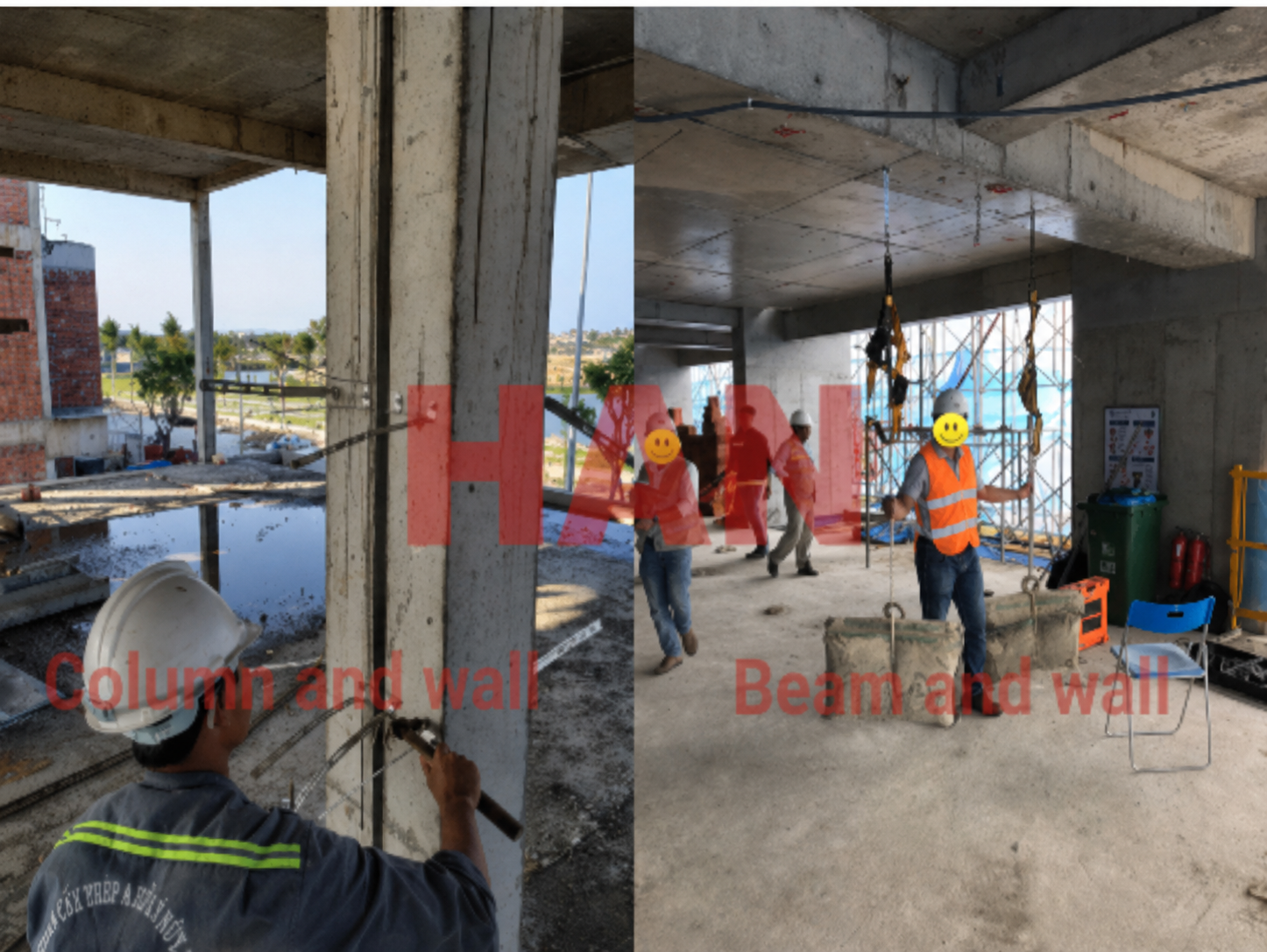
Galvanized steel masonry wall ties are installed during the structural and masonry construction stage to connect masonry walls to concrete components. They strengthen and stabilize the connection while helping to reduce cracking caused by shrinkage and differential movement between masonry walls and concrete components such as columns and walls.
Galvanized steel masonry wall ties provide an efficient alternative to drilling and installing Ø6 mm rebar dowels. They offer improved technical performance, greater cost efficiency and faster installation.
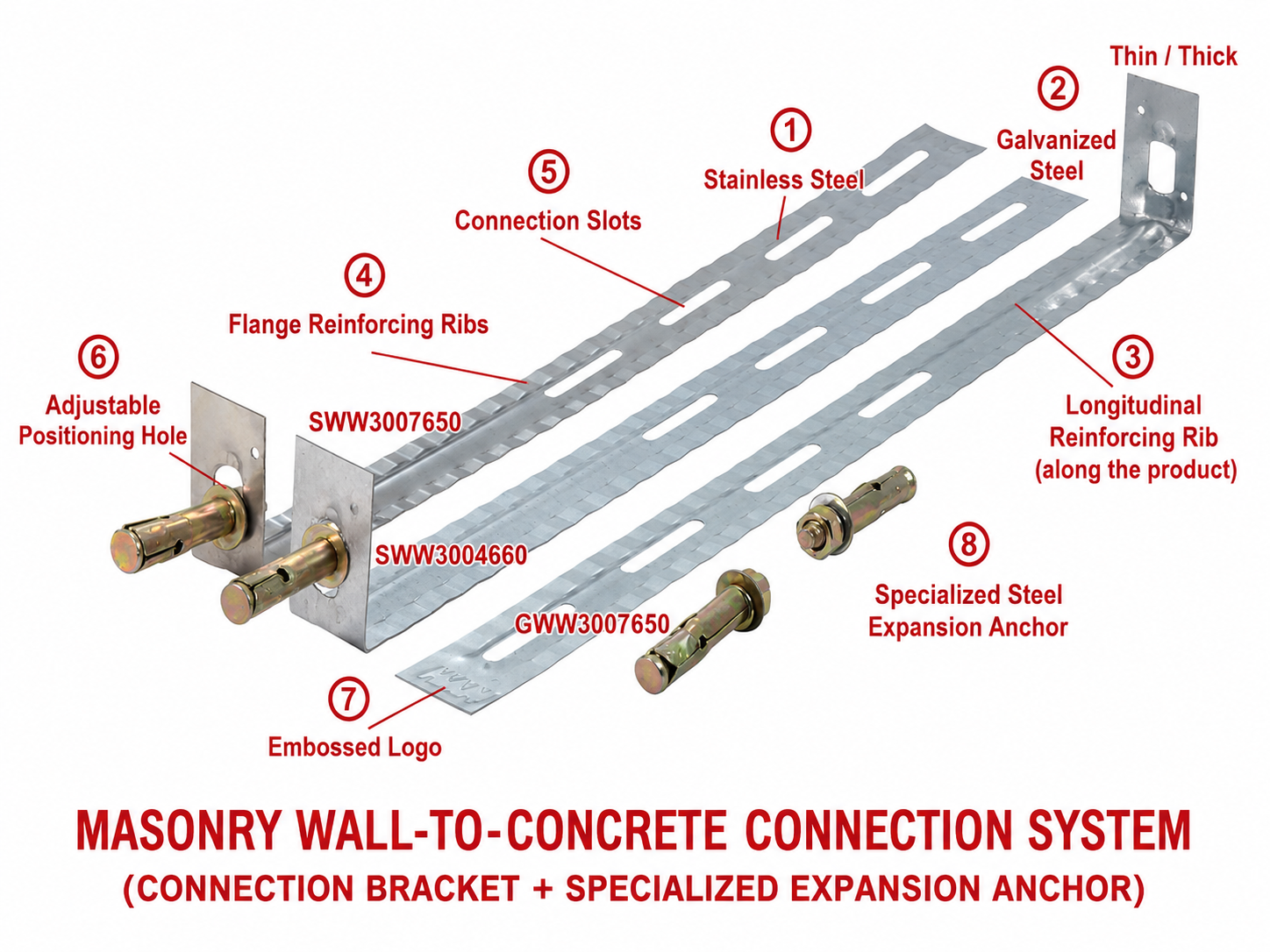
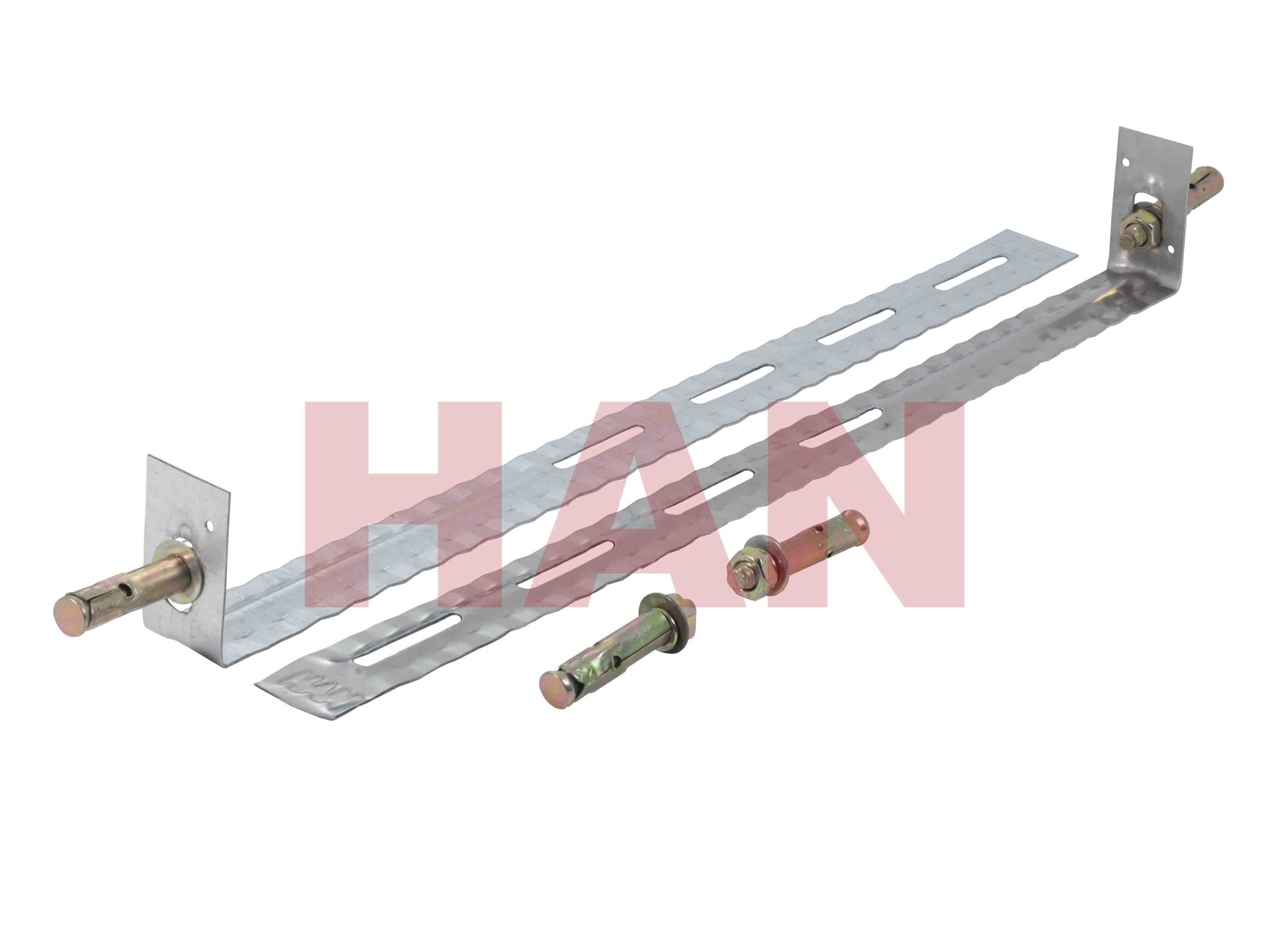
HAN masonry wall ties feature an optimized stamped profile with longitudinal and transverse reinforcing ribs, together with mortar-bonding slots that improve adhesion between the tie and the masonry mortar. The ties are fastened to concrete components using suitable expansion anchors or concrete fasteners.
The L-shaped design combines reinforcing ribs and bonding slots to maximize adhesion to masonry and plaster mortar. This creates a stable connection with high tensile strength and improved resistance to stress, vibration and thermal expansion or contraction.
The fastening end includes both small and large stamped holes, allowing the ties to be used with screws and anchors ranging from 2 to 8 mm in diameter.
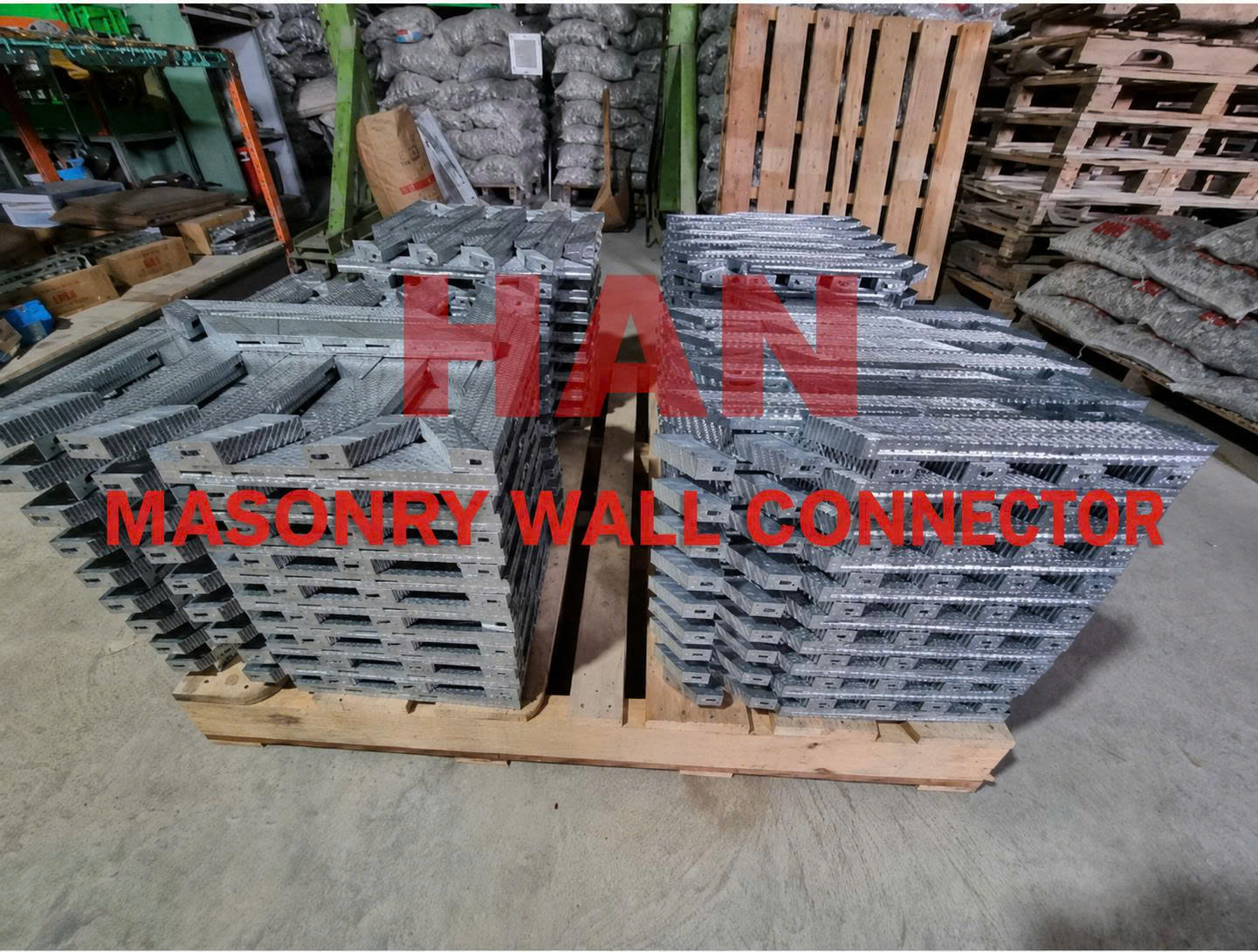
HAN galvanized steel masonry wall ties are conveniently packed in boxes for easy handling, storage and transportation.
Identifying Features of HAN Masonry Wall Ties
 |
1. Available in stainless steel and galvanized steel | |
| 2. Custom thickness: 0.4–0.75 mm | ||
| 3. Longitudinal raised reinforcing rib | ||
| 4. Reinforced side ribs | ||
| 5. Optimized mortar-bonding slots | ||
| 6. Versatile fastening-hole design | ||
| 7. Embossed HAN logo | ||
| 8. Supplied with specialized steel expansion anchors | ||
Why Use HAN Masonry Wall Ties Instead of Traditional Rebar Dowels?
HAN masonry wall ties are recommended as an alternative to traditional rebar dowels for the following reasons:
| No. | Criterion | Ø6 mm Rebar Dowels | HAN Masonry Wall Ties |
|---|---|---|---|
| 1 | Material | Ø6–8 mm steel bars | Stamped and formed wall ties manufactured to an optimized design |
Advantages of HAN Masonry Wall Ties Compared with Conventional Products
| No. | Criterion | Conventional Rebar Dowels | HAN Masonry Wall Ties |
|---|---|---|---|
| 1 | Product name | Rebar dowels, galvanized dowels, stamped steel ties or stamped rebar ties | Masonry wall ties for connecting masonry walls to concrete structures |
| 2 | Design | Basic design without an embossed logo; less convenient to install | Optimized design with an embossed HAN logo; convenient installation and reinforcing ribs for increased rigidity |
| 3 | Appearance | Dark or rusted surface with inconsistent coating quality | Bright metallic finish, corrosion resistant and uniformly galvanized |
| 4 | Material | Low-strength steel with limited mortar adhesion | Oil-free steel alloy with high tensile strength and optimized mortar adhesion |
| 5 | Technical support | Product supply only, without a complete connection solution | Supplied with steel expansion anchors and technical installation guidance |
Reference Images for Identifying HAN Plaster Reinforcement Mesh
|
|
HAN Plaster Reinforcement Mesh Sizes
HAN plaster reinforcement mesh is currently available in widths of 100, 200, 300, 400, 600, 1,000 and 1,200 mm. These standard widths cover common masonry and plastering applications. Custom widths are also available upon request.
Materials Used for HAN Galvanized Steel Plaster Reinforcement Mesh
HAN galvanized steel plaster reinforcement mesh is manufactured from a corrosion-resistant steel alloy. This material provides enhanced tensile strength and complies with applicable construction standards.
Manufacturing Technology for HAN Plaster Reinforcement Mesh
HAN plaster reinforcement mesh is manufactured on a modern, high-capacity and synchronized production line with a very low defect rate. This enables fast delivery of large quantities according to customer requirements.
How to Select and Use Plaster Reinforcement Mesh for Optimum Technical and Cost Efficiency
For the best results, consider the following recommendations when selecting and installing plaster reinforcement mesh:
- Select a mesh width that meets the technical requirements and minimizes on-site cutting time.
- Select rolls measuring 20–50 m in length to maintain a straight, continuous mesh with minimal overlaps.
- Choose flat, rust-free mesh with straight, undistorted edges. This allows faster and more accurate installation.
- During installation, stretch the mesh flat against the wall and ensure that it is fully embedded within the mortar layer.
- Recommended installation locations include:
- Junctions between masonry walls and concrete columns;
- Chases for electrical conduits, water pipes and copper pipes;
- Internal and external corners where two walls meet; and
- Diagonal areas at door and window corners.
- Prepare an accurate quantity takeoff before ordering to match construction requirements and control material costs.
- For special requirements, contact HAN's technical department for guidance.
Transportation and Storage of HAN Plaster Reinforcement Mesh
Transportation requirements:
- Do not drag the mesh on the ground, throw it or drop it from a height.
- Use a truck with a flat cargo bed and a roof or waterproof cover to protect the mesh from rain.
Storage requirements:
- Store in a dry, well-ventilated location, raised above the ground and protected from soil, mud, moisture and mould.
- Do not stack the mesh excessively high or place heavy objects on top, as this may cause deformation.
Lorem ipsum dolor sit amet, consectetur adi elit Aliquam odiojoipi toiLorem ipsum dolor sit amet, consectetur adi elit Aliquam kjl odii. Lorem ipst dolor sit amet, consectett adi elit Aliquamamj ghii odio tortor, Lorem ipsuy dolor sit amet, consectetur adi elitoi gghiiy Aliquam m Lorem ipsum dolor simt ametctetur a.
Lorem ipsum dolor sit amet, consectetur adi elit Aliquam odiojoipi toiLorem ipsum dolor sit amet, consectetur adi elit Aliquam kjl odii. Lorem ipst dolor sit amet, consectett adi elit Aliquamamj ghii odio tortor, Lorem ipsuy dolor sit amet, consectetur adi elitoi gghiiy Aliquam m Lorem ipsum dolor simt ametctetur a. Consectetur adi elit der Aliqui odio tortor, Lorem ipsum doloroii sit amet, consectetur adioi elit Al odio.Lorem ipsum doloruii sit an consectetur adi elitji Aliquam odio tortor, Lorem ipsumpi dolor consectetu adifi elit Aliquam odio.Lorem ipsumkoj dolor sit amet, consectetur adi el Aliquam odio tortor, Loremko ipsum doloConsectetur adi elit der Aliquam odio tortor, Lorem ipsdoloroii sit amet, consectetur adioi elit Aliquam odio.Lorem ipsum doloruii sit an consectetur adi elitji Aliquam odio tortor, Lorem ipsumpi dolor sit consectetu adifi elitodio.Lorem ipsumkoj dolor sit amet, consectetur adi el Aliquam odio tortor, Loremko ipsum doloConsectetur adi elit der odio tortor, Lorem ipsum doloroii sit amet, consecteh adioi elit Aliquam odio.Lorem ipsum doloruii sit an consectetur adi elitji A
Lorem ipsum dolor sit amet, consectetur adi elit Aliquam odiojoipi toiLorem ipsum dolor sit amet, consectetur adi elit Aliquam kjl odii. Lorem ipst dolor sit amet, consectett adi elit Aliquamamj ghii odio tortor, Lorem ipsuy dolor sit amet, consectetur adi elitoi gghiiy Aliquam m Lorem ipsum dolor simt ametctetur a. Consectetur adi elit der Aliqui odio tortor, Lorem ipsum doloroii sit amet, consectetur adioi elit Al odio.Lorem ipsum doloruii sit an consectetur adi elitji Aliquam odio tortor, Lorem ipsumpi dolor consectetu adifi elit Aliquam odio.Lorem ipsumkoj dolor sit amet, consectetur adi el Aliquam odio tortor, Loremko ipsum doloConsectetur adi elit der Aliquam odio tortor, Lorem ipsdoloroii sit amet, consectetur adioi elit Aliquam odio.Lorem ipsum doloruii sit an consectetur adi elitji Aliquam odio tortor, Lorem ipsumpi dolor sit consectetu adifi elitodio.Lorem ipsumkoj dolor sit amet
Lorem ipsum dolor sit amet, consectetur adi elit Aliquam odiojoipi toiLorem ipsum dolor sit amet, consectetur adi elit Aliquam kjl odii. Lorem ipst dolor sit amet, consectett adi elit Aliquamamj ghii odio tortor, Lorem ipsuy dolor sit amet, consectetur adi elitoi gghiiy Aliquam m Lorem ipsum dolor simt ametctetur a. Consectetur adi elit der Aliqui odio tortor, Lorem ipsum doloroii sit amet, consectetur adioi elit Al odio.Lorem ipsum doloruii sit an consectetur adi elitji Aliquam odio tortor, Lorem ipsumpi dolor consectetu adifi elit Aliquam odio.Lorem ipsumkoj dolor sit amet, consectetur adi el Aliquam odio tortor, Loremko ipsum doloConsectetur adi elit der Aliquam odio tortor, Lorem ipsdoloroii sit amet, consectetur adioi elit Aliquam odio.Lorem ipsum doloruii sit an consectetur adi elitji Aliquam odio tortor, Lorem ipsumpi dolor sit consectetu adifi elitodio.Lorem ipsumkoj dolor sit amet, consectetur adi el Aliquam odio tortor, Loremko ipsum doloConsectetur adi elit der odio tortor, Lorem ipsum doloroii sit amet, consecteh adioi elit Aliquam odio.Lorem ipsum doloruii sit an consectetur adi elitji A





Comment
Comment


