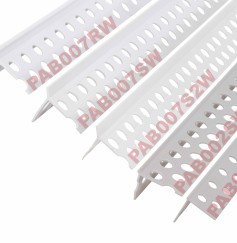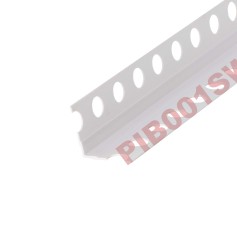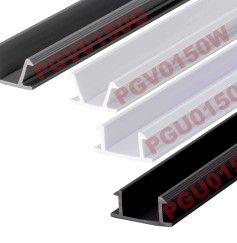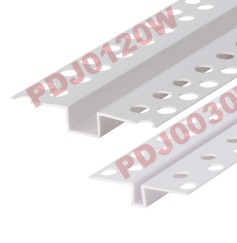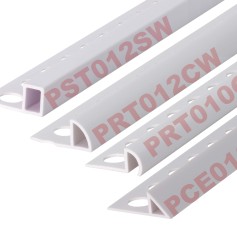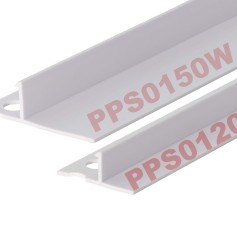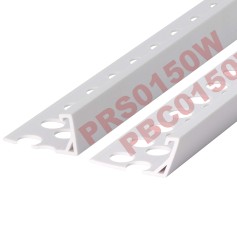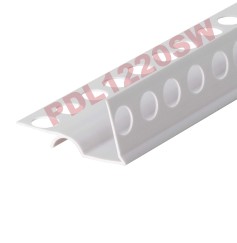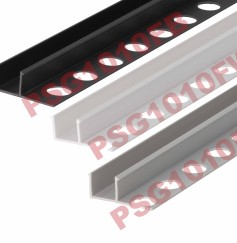


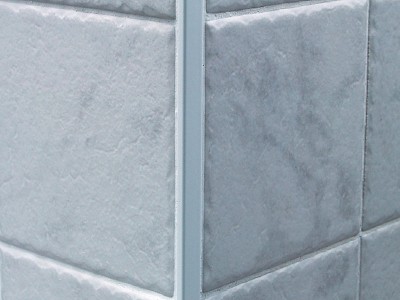
uPVC Strip Devider bead

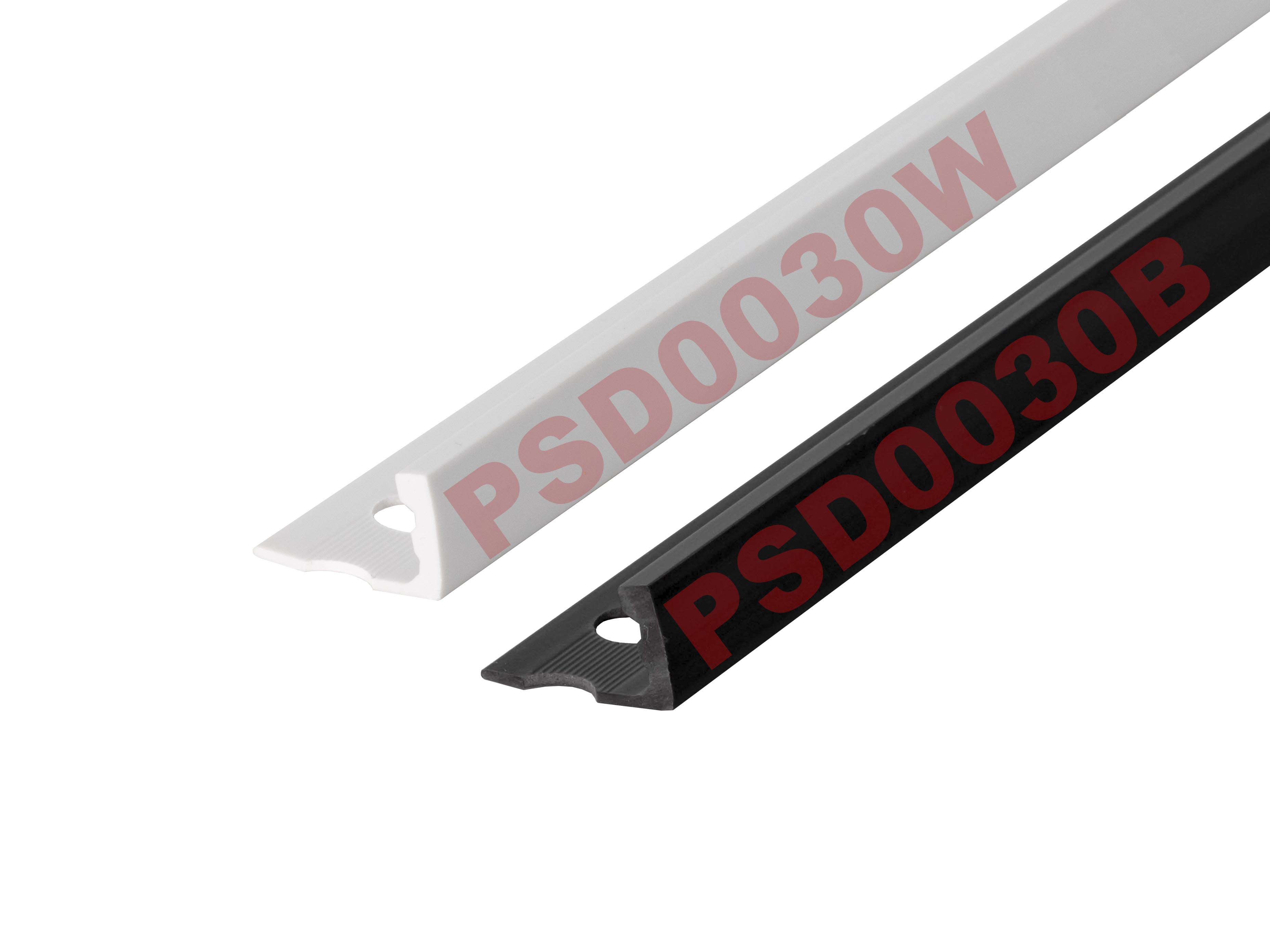
Standard
Complies with applicable construction material standards.
Complies with user safety standards.
Complies with environmentally friendly manufacturing technology standards.
Complies with modern production process management standards.
Standards: ASTM D638, ASTM D790, ASTM D1525, ASTM D648.
Specifications
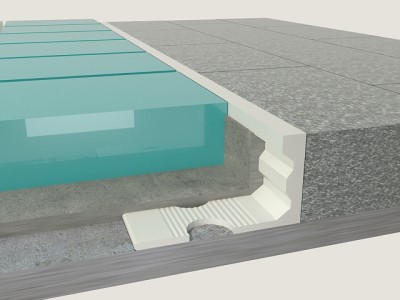
Function: Creates a decorative border and visual accent while providing a neat transition between two different types of materials.
Installation position: At junctions between different cladding or flooring materials, such as wood and stone or stone and ceramic tiles, or between two surfaces at different levels.
Material: uPVC or PVC-U, also known as Unplasticized Polyvinyl Chloride.
Profile size: 12 mm or custom-made upon request.
Quality: Made from 100% virgin uPVC material.
Colours: White, black, grey, or customised upon request.
Length: 2.5 m per piece or cut to the required length.
Packaging: 120 pieces per box.


General Introduction to Finishing Beads and uPVC Transition Beads
Finishing beads are products designed to make finishing works faster, more accurate and visually refined while reducing installation errors. They can be manufactured from various materials, including galvanized steel, stainless steel and uPVC.
uPVC finishing beads are made from engineered uPVC and are available in various profile designs for finishing works such as plastering, rendering, tiling and putty application.
Transition beads may be manufactured from galvanized steel, stainless steel, uPVC, aluminium or other materials. They are used in plastering, rendering and tiling works to reduce errors at transitions, plaster terminations, tile terminations and junctions between plastered and tiled surfaces.
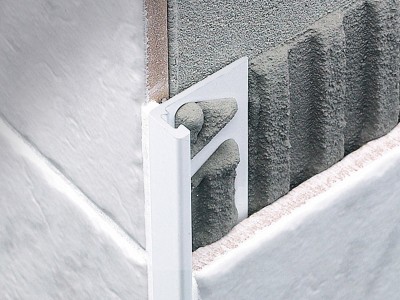
uPVC Transition Beads are manufactured from uPVC with an L-shaped design and a perforated anchoring flange. They are used at transitions between different materials, particularly plastered and tiled surfaces. The beads accelerate installation, reduce workmanship errors and create a refined, safe and visually consistent finish.
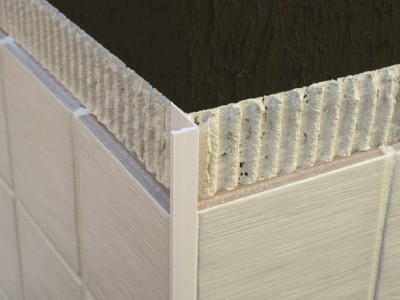
uPVC Transition Beads can be used on floors, walls or any location where two different types of tiles meet, or where a plastered surface meets a tiled finish.
Classification of uPVC Transition Beads
HAN uPVC Transition Beads are currently available in one L-shaped profile with a perforated anchoring flange, designed to separate plastered surfaces from tiled finishes.
Functions of uPVC Transition Beads
uPVC Transition Beads provide the following benefits:
- Help reduce installation errors and cracking caused by material shrinkage at junctions between plaster and other materials such as tiles or cladding panels.
- Create a technical and decorative separation line at the transition between two different materials.
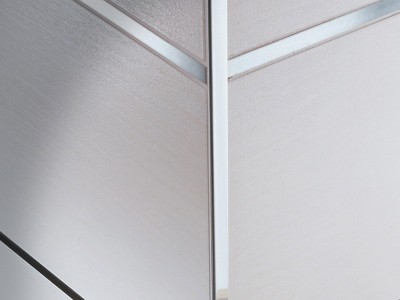
- When used at external corners, create accurate, refined and visually consistent plastered or tiled corners.
- Create straight, precise lines that are safe for users and easy to clean.
- Make wall plastering and rendering faster and more accurate.
- Add refined architectural lines and visual definition to the building.
General Introduction to PVC, uPVC and Engineered uPVC
uPVC Transition Beads are manufactured from uPVC, also known as PVC-U. The full name of uPVC is “Unplasticized Polyvinyl Chloride.” It is a form of PVC that contains no plasticizers and is therefore also known as rigid PVC. This rigidity gives uPVC superior mechanical, physical and chemical properties compared with conventional PVC.
HAN engineered uPVC has been researched and developed from a uPVC base material, with its mechanical, physical and chemical properties adapted to meet different construction requirements.
HAN uPVC Transition Beads are made from engineered uPVC to provide enhanced rigidity, toughness, elasticity, surface gloss, colour durability and chemical resistance, making them suitable for plastering, rendering and tiling works.
HAN uPVC Transition Beads are safe for installers and building users and are easy to clean and maintain.
Under normal ambient climatic and temperature conditions, the service life of the uPVC Transition Beads is compatible with that of the plaster or render layer.
Identifying Characteristics of HAN uPVC Transition Beads
| No. | Characteristic | HAN uPVC Transition Bead |
| 1 | Product code |
PSD0030 |
| 2 | Design | Designed to create a transition between two different materials, including plaster, render, tiles and panels. |
| 3 | Profile | L-shaped profile available in various sizes, with reinforcing ribs and perforations. |
| 4 | Size | Suitable for plaster or render layers with a minimum thickness of 12 mm. |
| 5 | Application |
Helps reduce errors when forming transitions between plastered surfaces and other materials. |
| 6 | Colours | White, grey, black or custom colours upon request. |
| 7 | Manufacturing technology | Engineered uPVC extrusion. |
| 8 | Material | Engineered uPVC. |
| 9 | Surface finish | Smooth and glossy. |
| 10 | Mechanical, physical and chemical properties | Suitable for plastering, rendering and tiling works in accordance with applicable construction standards. |
| 11 | Packaging | 2.5 m per bead; 50–100 beads per carton. |
How to Select and Use uPVC Transition Beads
To achieve the best technical and economic results when using uPVC Transition Beads at junctions between different materials, customers should observe the following guidance:
| No. | Item | Key Considerations | What to Avoid |
| 1 | Product code | Confirm and select the correct HAN product code when installation requirements have already been specified. | |
| 2 | Design |
Select a suitable profile design, ensuring that the bead thickness is compatible with the plastering, rendering or tiling requirements. |
Do not select a lower-cost design without considering installation, performance and aesthetic requirements. |
| 3 | Dimensions | Consider both the thickness and width of the flange to select the most suitable size. | |
| 4 | Length | For small quantities, use HAN standard lengths of 2 m, 2.5 m or 3 m. For large projects, custom-cut lengths can reduce offcuts and unnecessary costs. | Avoid ordering lengths that create excessive offcuts, material waste and additional installation costs. |
| 5 | Quantity | Determine the required quantity and lengths accurately, including a reasonable allowance for cutting waste. | |
| 6 | Ordering schedule | Ensure that the products are available in the site warehouse before installation begins so that the construction schedule is not affected. | Avoid placing orders too close to the installation date, as this may delay the work. |
| 7 | Identifying genuine HAN products | Purchase from an authorized distributor or directly from HAN. Genuine packaging should clearly display HAN information, including the product code, address and telephone number. | Products supplied in packaging without clear HAN factory information may not be genuine HAN products. |
| 8 | Responsible personnel | Personnel with appropriate knowledge and experience should work directly with HAN’s technical advisory team before making a purchasing decision. | |
| 9 | Installation method | Follow HAN’s installation instructions, including fully embedding the anchoring flange in mortar, selecting suitable plaster or tile-bed thickness, and fixing the bead firmly at the correct level. For profiles with temporary protective film, remove the film at the appropriate time to preserve the finished surface. | |
| 10 | Storage | Follow the recommended transport and storage procedures to maintain product quality before installation. |
Correct Transport and Storage of uPVC Finishing Beads
Transport precautions for HAN uPVC Finishing Beads:
- Do not drag cartons across the ground or throw them from a height.
- Do not keep cartons tilted or standing upright for extended periods.
- Use a truck with a flat loading bed and a covered body or tarpaulin to protect the cartons from rain.
- When transporting different types of beads in the same vehicle, place longer and heavier cartons underneath shorter and lighter cartons.
- Do not place heavy or sharp objects on the cartons. Ensure that cartons are not bent, distorted or punctured during transport.
- Handle cartons correctly during loading and unloading to prevent tearing, bending or distortion.
Storage precautions for HAN uPVC Finishing Beads:
- Store indoors on pallets in a dry, cool and well-ventilated area. Protect the products from direct sunlight, water, soil, mud, moisture, mould and high temperatures.
- Do not store cartons upright. Individual beads should not be kept upright or leaning for extended periods, as this may cause deformation.
- When the beads are not in use, clean and repack them in their cartons to protect them from dust and preserve their colour, smoothness and surface gloss.
- Do not turn cartons upside down. Keep them in the orientation indicated by the directional arrows on the packaging.
Quality Standards for uPVC Transition Beads
HAN uPVC Transition Beads comply with the following relevant standards and requirements:
- ASTM D638, ASTM D790, ASTM D1525 and ASTM D648.
- Applicable requirements of current Vietnamese construction standards (TCVN).
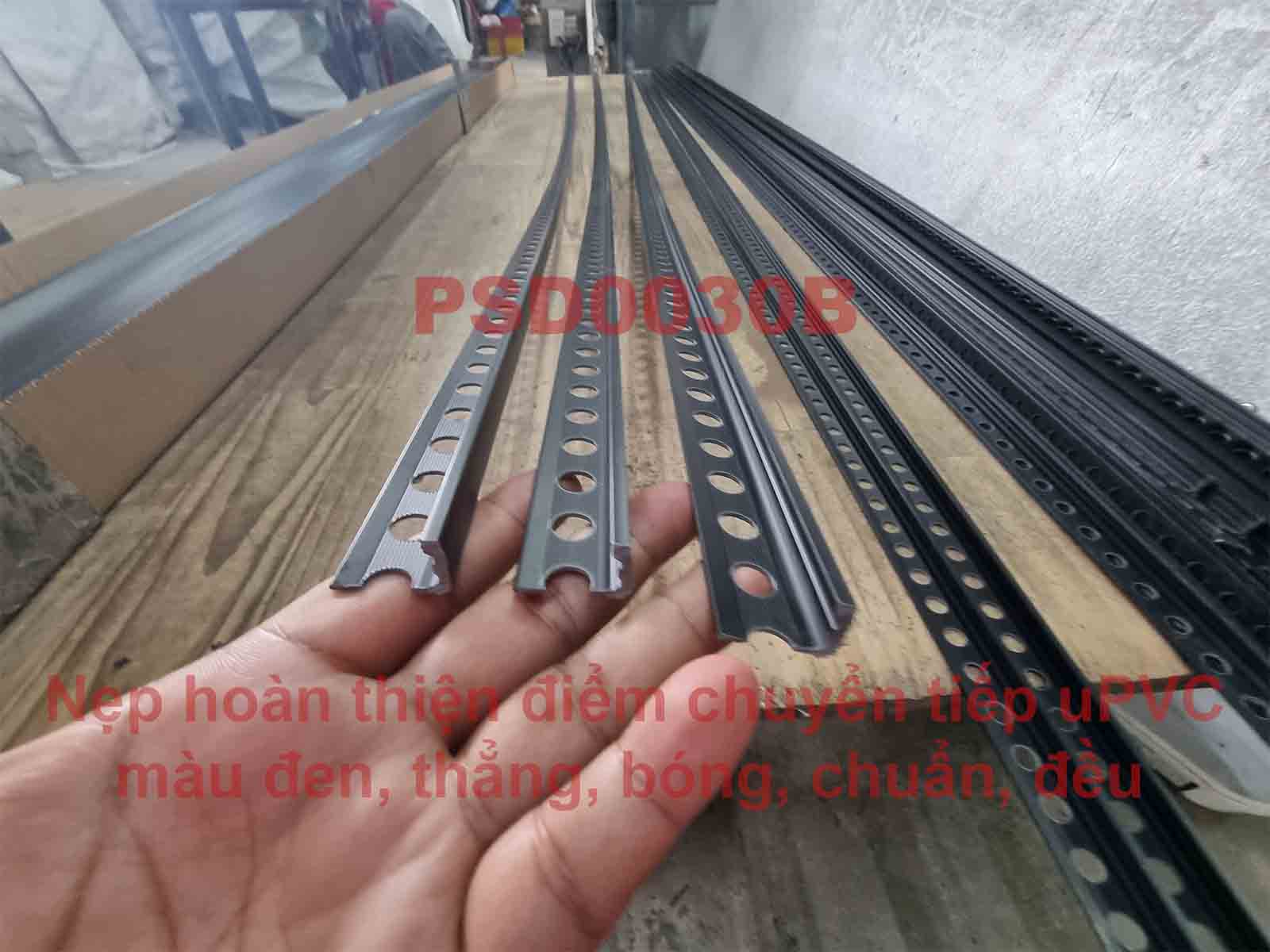
- Quality uPVC finishing beads should satisfy the criteria below.
 |
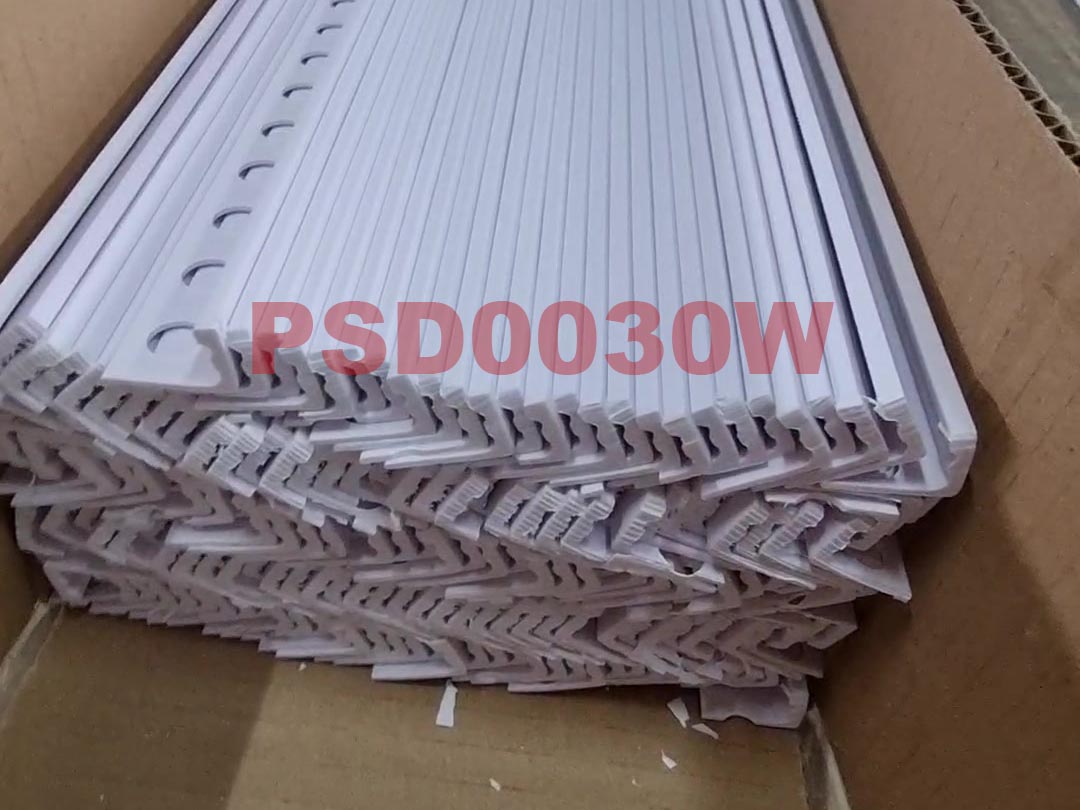 |
| The mechanical, physical and chemical properties of the uPVC must meet installation, mortar-bonding and service requirements. | The finished bead must be flat, straight, uniform and dimensionally accurate. |
Other Names for uPVC Transition Beads
uPVC Transition Beads may also be referred to by the following names:
- Transition bead or transition trim.
- L-shaped bead, plastic L-shaped trim or L-shaped tile trim.
To use HAN uPVC Transition Beads correctly at junctions between plastered, rendered and tiled surfaces, customers should observe the following guidelines:
- Select the appropriate transition bead profile for the application, paying particular attention to the bead height.
- Select a bead size suitable for the tile thickness. The bead height should be at least 1 mm greater than the tile thickness.
- Choose a suitable colour according to the design and aesthetic requirements. The three standard colours are white, red and grey.
- Level and clean the substrate thoroughly before plastering, rendering or tiling. Dampen the surface to improve adhesion.
- Prepare suitable setting-out and levelling tools. A laser level can accelerate installation by simultaneously aligning multiple vertical and horizontal edges within the same area.
- Use a specialized cutting tool to produce clean, accurate joints, particularly at 90° intersections.
- Secure the bead firmly with mortar. Ensure that the bead flanges are fully embedded in mortar to prevent hollow spots or voids beneath the finished surface.
- Ensure that the completed plastered or rendered surface is straight, flat and uniform.
- Clean the exposed bead surface immediately after plastering, rendering or tiling. Make sure that no plaster, mortar or tile adhesive remains on the bead surface.
- Carry out final cleaning at the appropriate time and remove the protective film when suitable to preserve the quality and appearance of the bead.
- Store unused beads properly in accordance with HAN’s storage instructions.
Please contact HAN’s authorized distributor network or sales department for advice on HAN uPVC Transition Beads.
Comment
1 Comment
See Customer Reviews ( Total 1)

Lâm Hùng