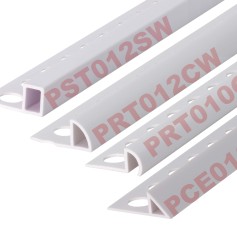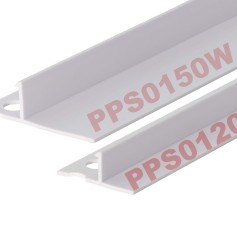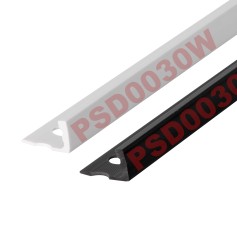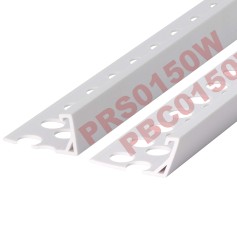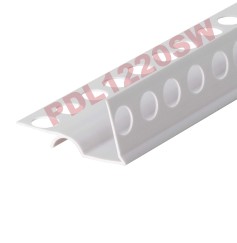


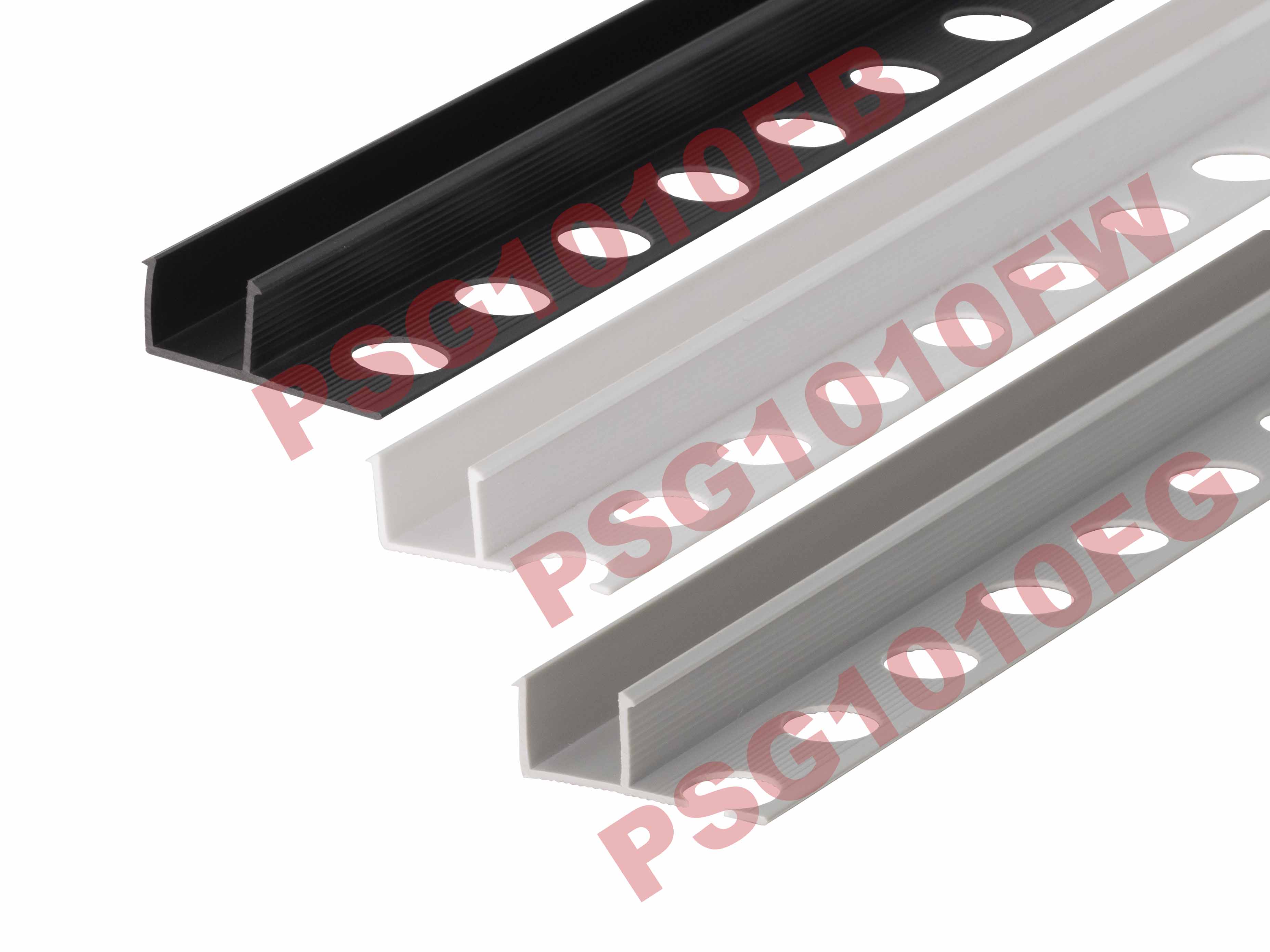


F-Shaped uPVC Reveal Bead
A precise finishing profile designed to create clean recessed reveal lines and refined transitions between plaster and adjacent materials.
General Introduction
Finishing beads help make construction finishing work faster, more accurate and visually consistent while reducing installation errors. Depending on the application, they can be manufactured from galvanized steel, stainless steel, aluminium or uPVC.
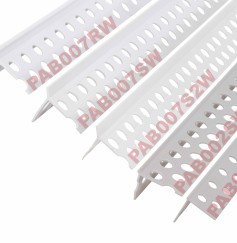
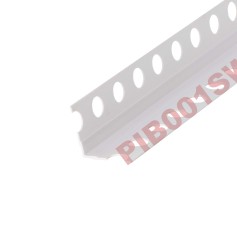
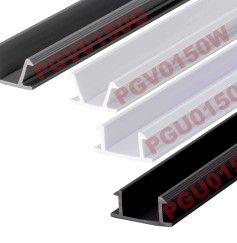
uPVC finishing beads are technical profiles available in various shapes and dimensions. They are used in plastering, tiling, skim coating and other architectural finishing applications.
Reveal beads create recessed architectural lines or separation joints where two surfaces or different materials meet. Typical installation locations include door-frame edges, wall bases and junctions between plastered and tiled surfaces.
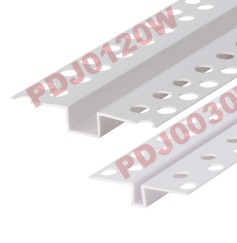
HAN's F-shaped uPVC reveal bead is manufactured from technical-grade uPVC. Its specially engineered profile creates straight, uniform and refined recessed lines while providing a clean termination point between plaster and an adjacent material.
The product is also commonly referred to as a uPVC F-bead, F-shaped reveal bead, skirting reveal bead, base-of-wall reveal bead, door-frame separation bead or wall-base separation bead.
Product Classification
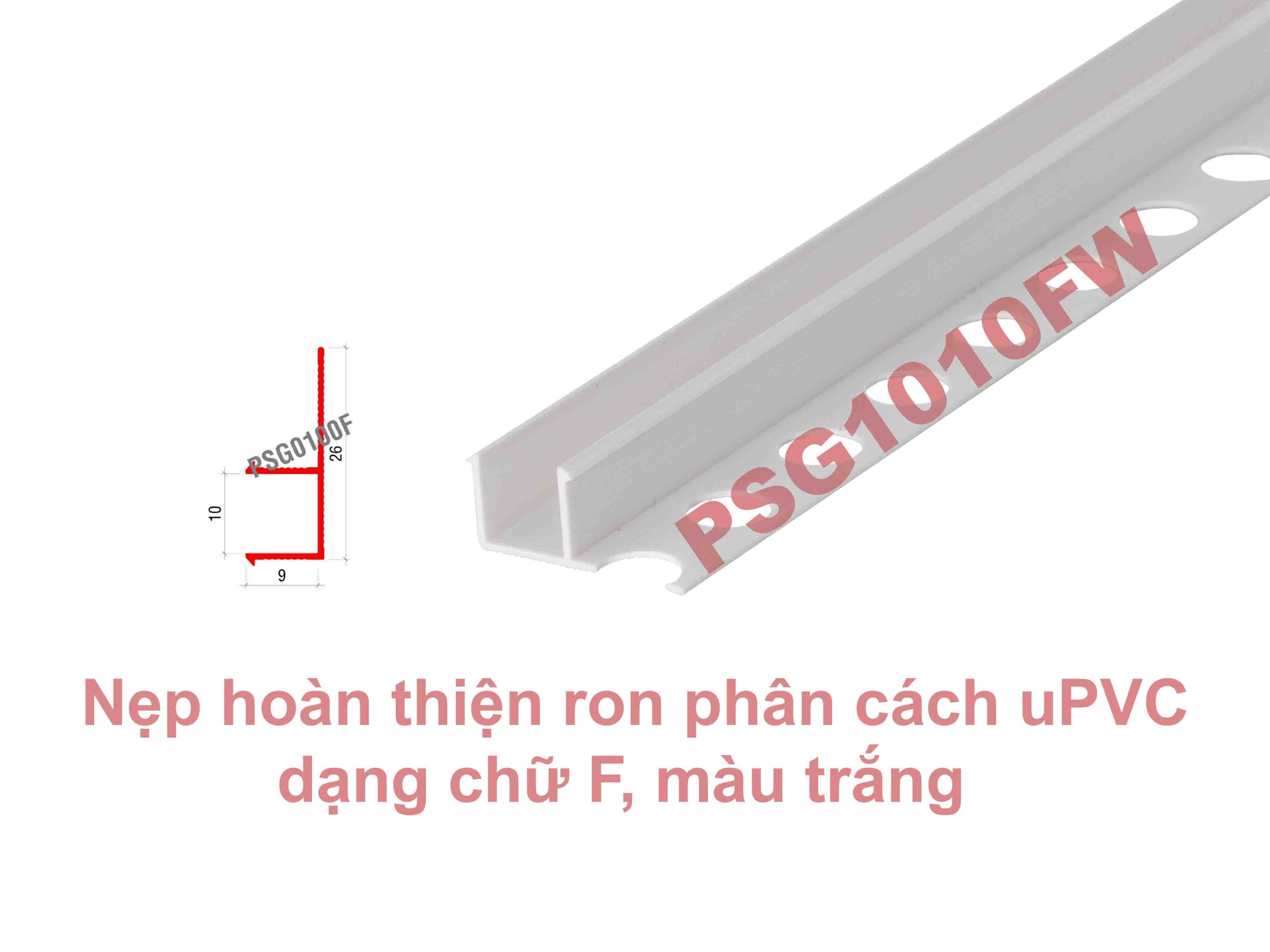
F-Shaped uPVC Reveal Bead
The F-shaped profile forms a precise recessed reveal and provides a straight, well-defined edge for plaster termination. It separates plaster from adjacent materials and helps reduce the risk of cracking at junctions caused by differential material shrinkage.
Key Functions
About PVC, uPVC and Technical-Grade uPVC
uPVC, also known as PVC-U, stands for unplasticized polyvinyl chloride. Unlike flexible PVC, it contains no added plasticizers and is therefore commonly known as rigid PVC. Its rigidity provides mechanical, physical and chemical properties suitable for many construction applications.
HAN develops technical-grade uPVC compounds for different construction requirements. The formulation is engineered to provide the necessary balance of rigidity, toughness, resilience, surface gloss, colour stability and chemical resistance.
HAN's uPVC reveal bead is designed for plastering and tiling applications in both interior and exterior areas. The finished surface is easy to clean, resistant to moss growth and suitable for use under normal environmental and climatic conditions.
HAN Product Identification and Specifications
| No. | Item | Specification |
|---|---|---|
| 1 | Product code | PSG1010F |
| 2 | Design | Creates a separation reveal between tile cladding and plaster finish. |
| 3 | Profile | F-shaped profile with a ribbed, perforated fixing flange. |
| 4 | Dimensions | Suitable for plaster layers with a minimum thickness of 10 mm. |
| 5 | Application | Creates a separation reveal between two different finishes. |
| 6 | Colours | White, grey, black or custom colours upon request. |
| 7 | Manufacturing process | Extruded technical-grade uPVC. |
| 8 | Material | Technical-grade uPVC. |
| 9 | Surface finish | Smooth and glossy. |
| 10 | Technical properties | Suitable for plastering and tiling work in accordance with applicable construction requirements. |
| 11 | Packing | 2.5 m per piece; 50–100 pieces per carton. |
Selection and Use for Wall-Base Plastering
To achieve the intended aesthetic, technical and economic performance at wall bases or junctions between plaster and tile, consider the following:
| No. | Item | Recommended | To Avoid |
|---|---|---|---|
| 1 | Product code | Confirm the correct HAN product code once the project requirement has been determined. | Do not order before confirming the required profile. |
| 2 | Design | Select a profile design and colour appropriate for the detail. | Do not select a lower-cost profile without considering installation, performance and appearance. |
| 3 | Dimensions | Match the plaster thickness to the bead depth. As a general installation allowance, the plaster thickness should be approximately 1 mm greater than the bead depth. | Avoid using a profile that is incompatible with the finish build-up. |
| 4 | Length | For small quantities, use HAN's standard lengths of 2 m, 2.5 m or 3 m. For larger projects, custom-cut lengths can help reduce waste. | Avoid unnecessary offcuts and material waste. |
| 5 | Quantity | Determine the required quantity and lengths in advance, including a suitable allowance for installation waste. | Avoid ordering without a verified quantity take-off. |
| 6 | Lead time | Ensure the product is available on site before installation work begins. | Avoid placing orders too close to the installation date, as this may affect the construction schedule. |
| 7 | HAN identification | Purchase through HAN or an authorized distributor. Packaging should clearly show the HAN product code, address and contact information. | Packaging without clear HAN manufacturer information may not contain genuine HAN products. |
| 8 | Project personnel | A knowledgeable and experienced project representative should coordinate directly with HAN's technical team before purchasing. | Avoid confirming technical selections without project review. |
| 9 | Installation | Follow HAN's installation instructions. Fully bed and securely fix the bead in mortar at the correct level, maintain the specified plaster thickness and remove any temporary protective film at the appropriate stage. | Avoid partial bedding, incorrect alignment or premature removal of protective film. |
| 10 | Storage | Follow all transport and storage recommendations before installation. | Avoid conditions that may bend, stain or damage the profiles. |
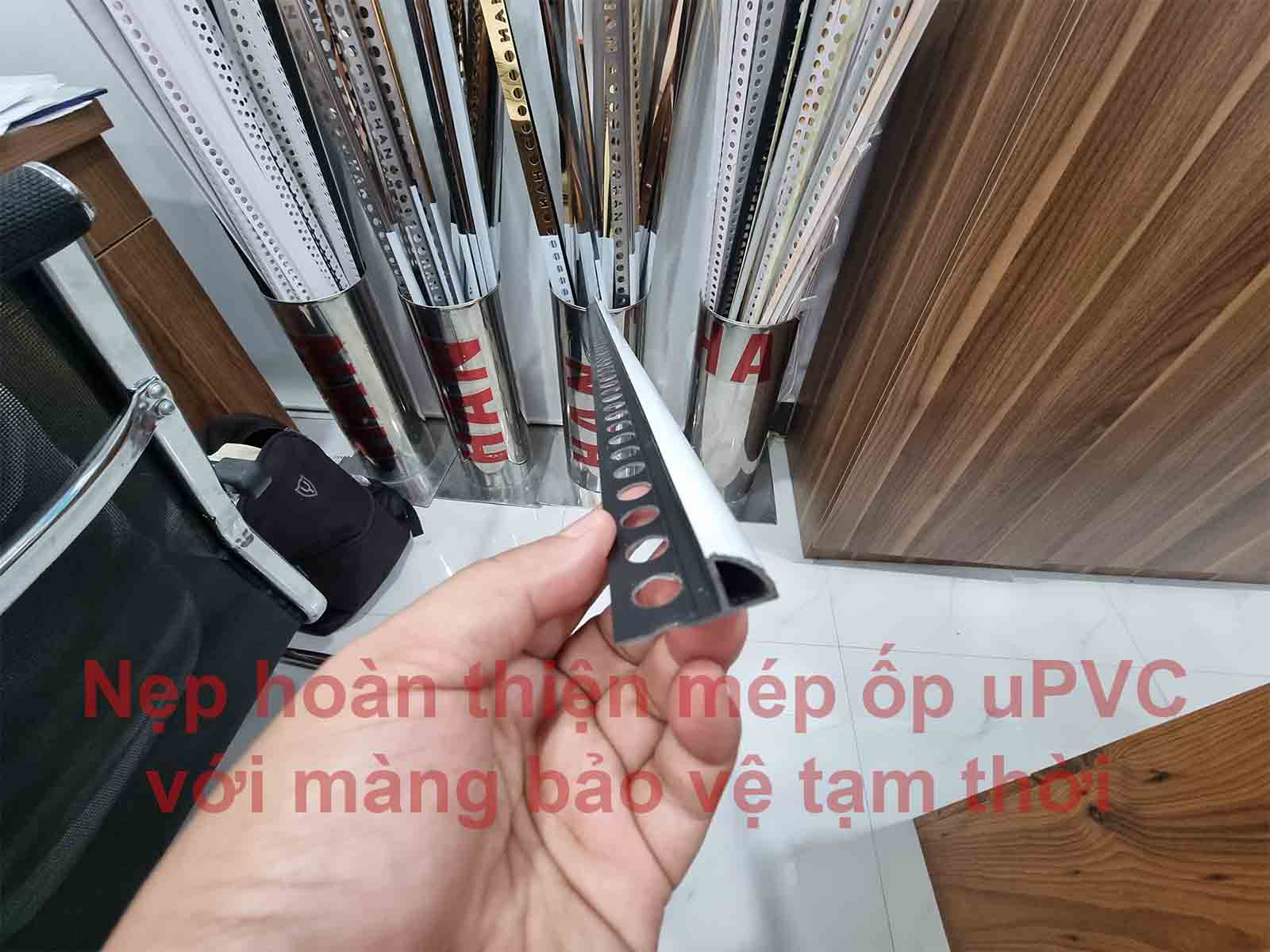
Temporary protective film: Remove the film only after installation, cleaning and related finishing work have been completed. Correct timing helps protect the exposed bead surface until the area is ready for use.
Transport and Storage
Transport Recommendations
- Do not drag cartons on the ground or throw them from a height.
- Do not leave cartons standing upright or at an angle for long periods.
- Use a vehicle with a flat load bed and suitable protection from rain.
- When transporting different profiles together, place longer and heavier cartons underneath shorter and lighter cartons.
- Do not place heavy or sharp objects on the cartons. Protect them from bending, crushing and puncture.
- Handle cartons carefully during loading and unloading.
Storage Recommendations
- Store indoors on pallets in a dry, cool and well-ventilated area, away from direct sunlight, water, soil, mud, moisture, mould and excessive heat.
- Do not store cartons upright. Do not leave individual profiles standing or leaning for extended periods, as this may cause bending.
- When not in use, clean and repack the profiles to protect them from dust and preserve their colour and surface finish.
- Keep cartons in the correct orientation according to the direction arrows printed on the packaging.
Quality Standards
HAN's F-shaped uPVC reveal bead is designed to meet applicable construction material and user-safety requirements. The product is manufactured using modern processes and environmentally responsible production technologies.
- Applicable test standards: ASTM D638, ASTM D790, ASTM D1525 and ASTM D648.
- Applicable current Vietnamese construction standards and regulations (TCVN).
- A quality uPVC finishing bead must meet both material-performance and dimensional requirements.
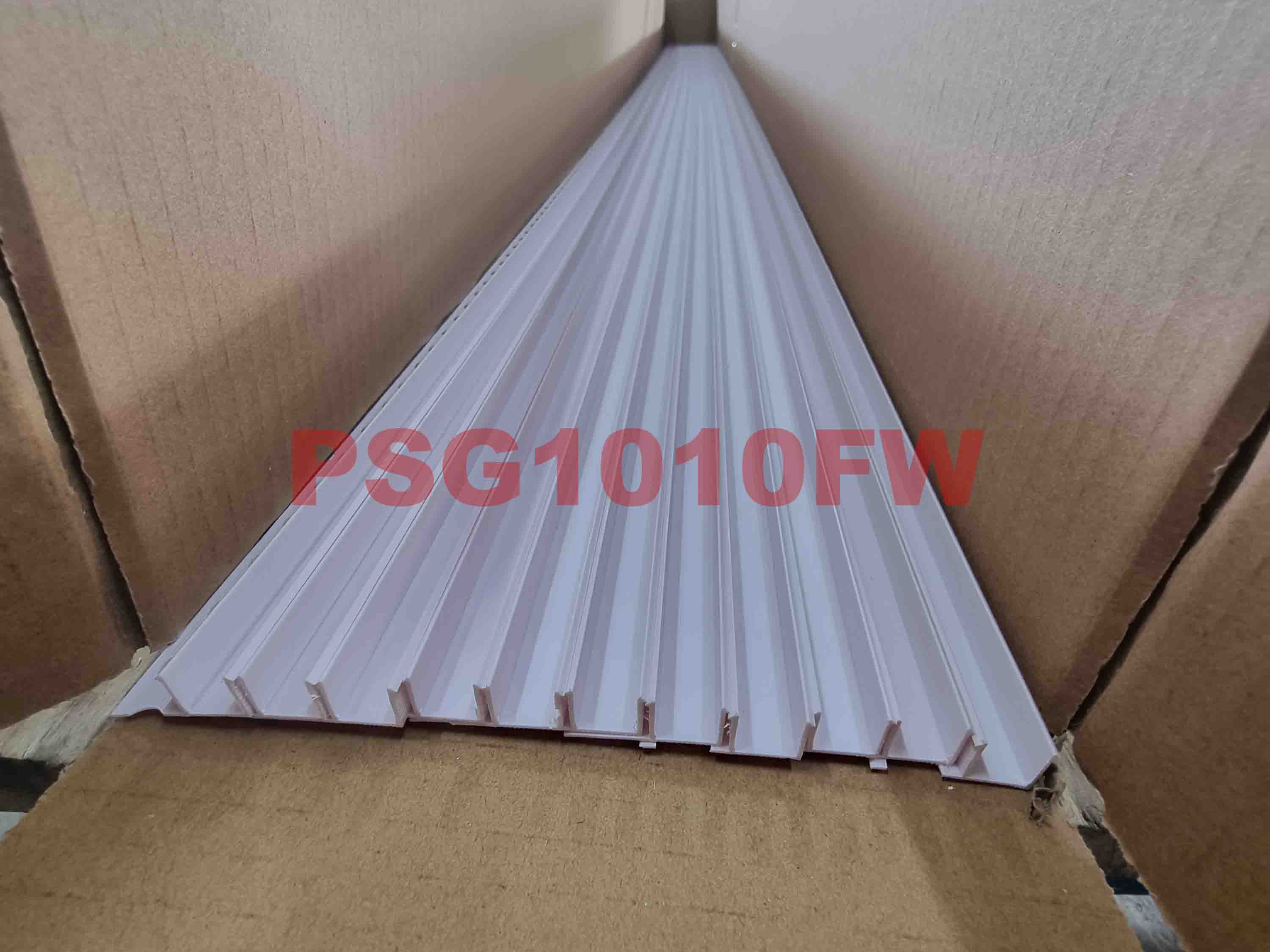
The uPVC material and its mechanical, physical and chemical properties must be suitable for installation, bonding with plaster mortar and long-term use.
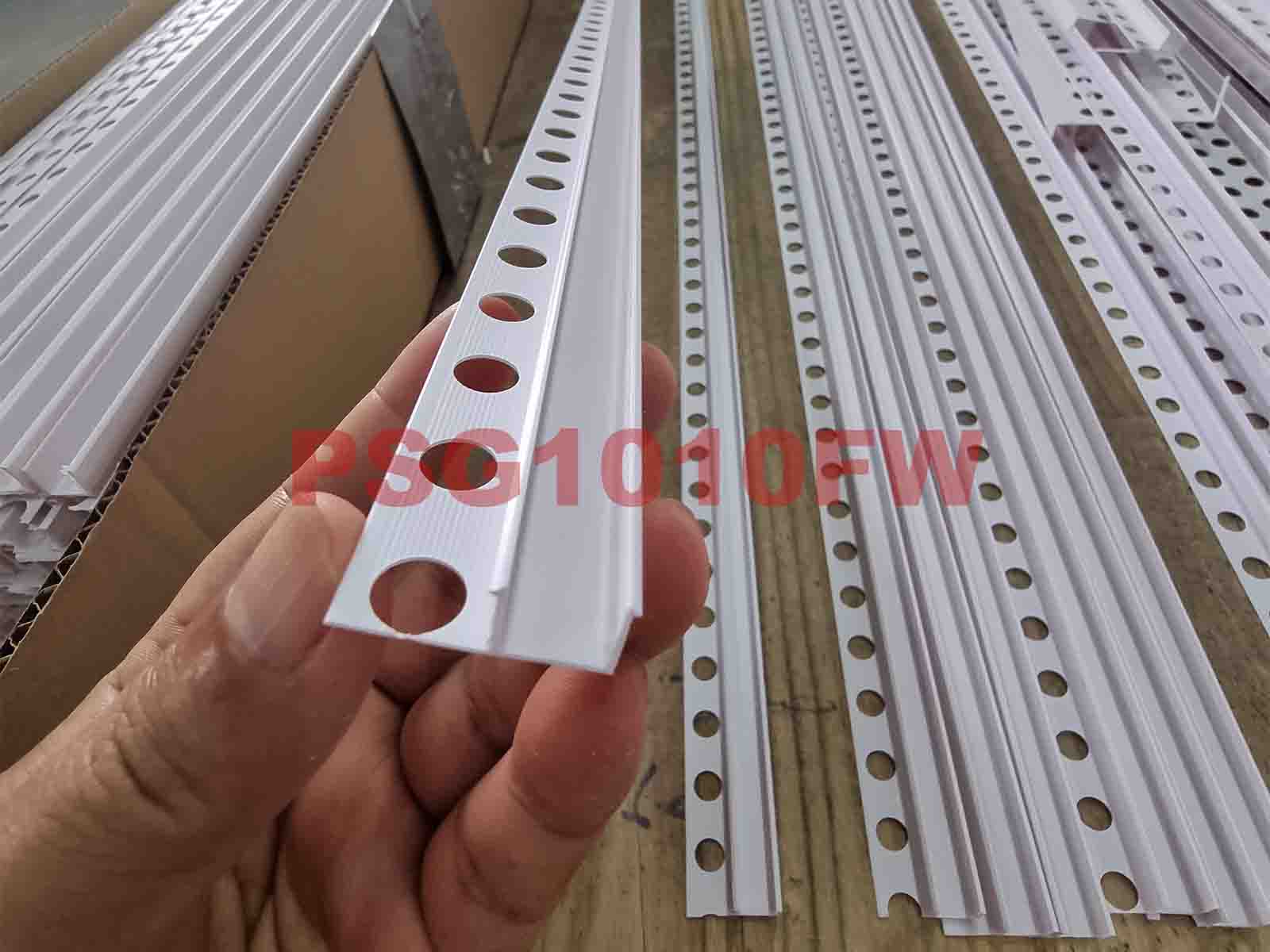
The finished profile must be flat, straight, uniform and dimensionally consistent.